Netflix “White and Black Spoon 2 — The Culinary Class War Begins Again”
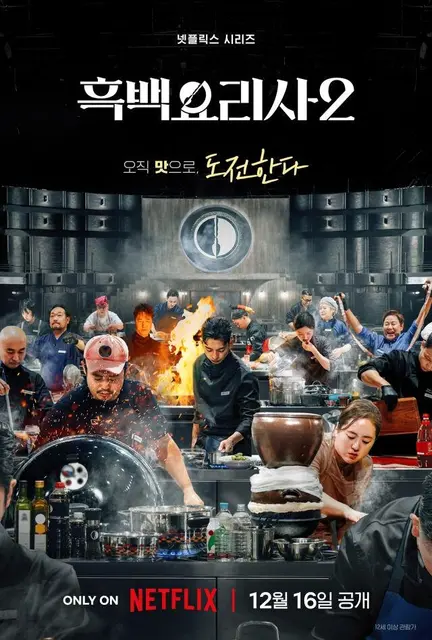
The fundamental structure remains the same in Season 2.
- White Spoon: Renowned chefs with Michelin stars and strong media presence
- Black Spoon: Owner-chefs of popular restaurants and highly skilled yet lesser-known culinary talents
Is it “fame” or “true skill”?
The greatest appeal of the show lies in how it confronts the invisible class structure that exists within the culinary world.
Here are just a few of the remarkable chefs appearing this season—names that spark instant curiosity.
-
Lee Jun — Two-Michelin-Star Chef
Founder and executive chef of Soigné in Seoul. Internationally acclaimed for blending refined Western techniques with the essence of Korean ingredients. -
Son Jong-won — One-Michelin-Star Chef
The chef behind Michelin-starred restaurants such as Eatanic Garden and L’Amant Secret. Known for creatively connecting French cuisine with Korean cultural sensibilities. -
Seonjae Seunim — Master of Korean Temple Cuisine
Recognized as Korea’s first “Temple Cuisine Master,” she expresses a philosophy that draws out the purest flavors of ingredients through Buddhist culinary traditions. -
Hou Deok-juk — Veteran of Chinese Cuisine
Master chef of the Chinese restaurant at Ambassador Hotel Seoul Pullman, with more than 57 years of culinary experience. -
Kim Hee-eun — Michelin-Star Owner Chef
A leading figure in modern Korean cuisine and co-owner of the Michelin-starred restaurant Soul, known for balancing tradition and innovation. -
Im Seong-geun — “Hansik Battle” Champion
Winner of the high-profile Korean cuisine competition “Hansik Battle,” now drawing attention for his restaurants in Seoul and Hong Kong. -
Sam Kim & Raymon Kim — Popular Celebrity Chef Duo
Sam Kim is known for his distinctive Italian-based cuisine, while Raymon Kim is celebrated for Korean-Western fusion. Both are widely recognized through television appearances. -
Jennie Walldén — Winner of “MasterChef Sweden”
Champion of the 2013 season of MasterChef Sweden, bringing global sensibility and deep respect for Korean cuisine to the competition. -
Brewmaster Yun (Yun Na-ra) — Fermentation Innovator
Though part of the “Black Spoon” side, she captivates viewers with dishes inspired by traditional Korean liquor and unique fermentation techniques. -
Lee Ha-sung — “Culinary Monster”
Declaring from the outset that he intends to become the best, Lee Ha-sung—nicknamed “Culinary Monster” on the show—has quickly become a standout presence.
Returning from Season 1, the judges are Baek Jong-won and Michelin three-star chef Ahn Sung-jae.
Their evaluations combine mass appeal with professional authority, resulting in verdicts that feel both balanced and convincing.
“White and Black Spoon 2” is not simply about winning or losing.
It tells stories of chefs who once went unrecognized, who kept cooking for their families, and who desperately want acknowledgment.
When a Black Spoon challenger defeats a White Spoon chef, it feels like more than a technical victory—it becomes a moment where an entire life’s effort is finally rewarded.
Among the many battles, one of the most unforgettable rules is called “Infinite Cooking Hell.”
The ingredients used are strikingly ordinary—found in any household kitchen. Precisely because they are so familiar, we tend to assume they cannot become extraordinary.
In Season 1, tofu symbolized this challenge. In Season 2, once again, humble ingredients that rarely take center stage are chosen. There is no escape: to survive, chefs must continue using the same ingredient as the main component in every round.
What is tested is not merely technical skill, but creative depth. How many ideas can a chef draw upon? How flexibly can they rethink an ingredient? Can they transform imagination into a fully realized dish?
Watching entirely different creations emerge from the same ingredient feels less like a cooking contest and more like an endurance battle of creativity. It even makes viewers reflect on their own kitchens: perhaps the ordinary leftovers in the fridge still hold untapped potential.
“Infinite Cooking Hell” does more than showcase professional skill—it challenges the audience’s own assumptions.
The final round centers on cooking for oneself. Because each dish is made for the chef personally, every plate carries a story that quietly moves the heart.
If earlier rounds were about cooking to be judged, the finale becomes a confrontation with oneself. Even without many words, the gestures, the process, and the completed dishes convey deep emotion.
By this point, white and black no longer matter. What remains is the question: “What is cooking?” It is not a flashy ending, but one that lingers deeply in the heart.
The global success of “White and Black Spoon (흑백요리사)” stemmed not from spectacle, but from true skill and authentic storytelling. Season 2 preserves that essence while expanding the emotional and creative scope of the competition.
This is a series for anyone who loves food—and for anyone who resonates with themes of work, recognition, and challenge.